Four floating barriers to combat sargassum are being considered in Saint Martin
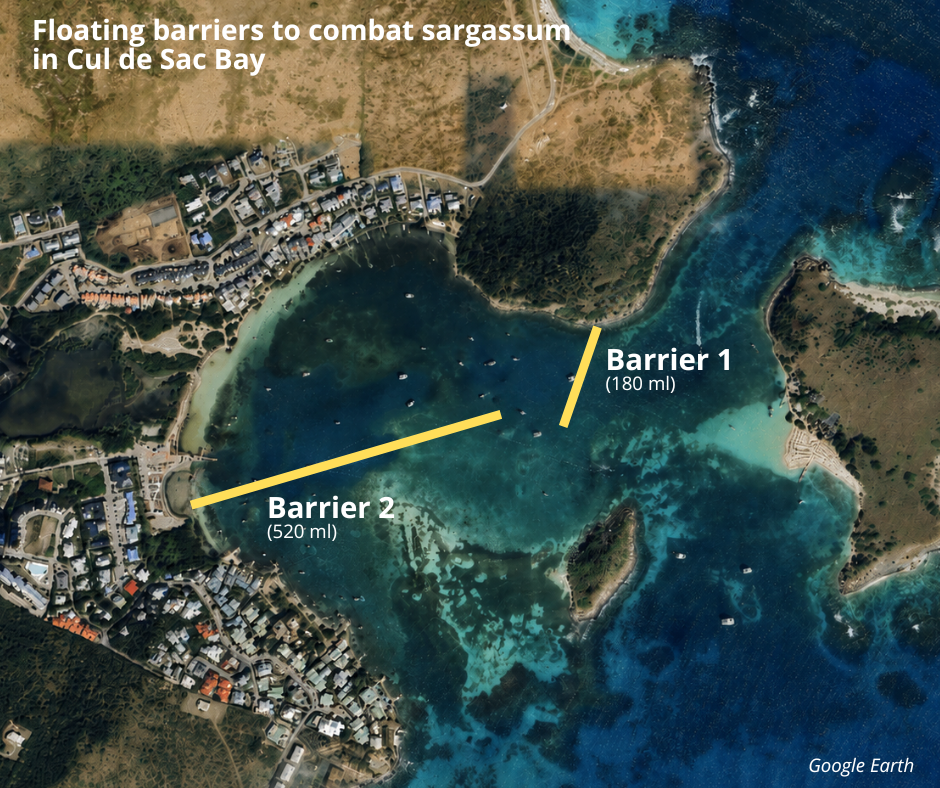
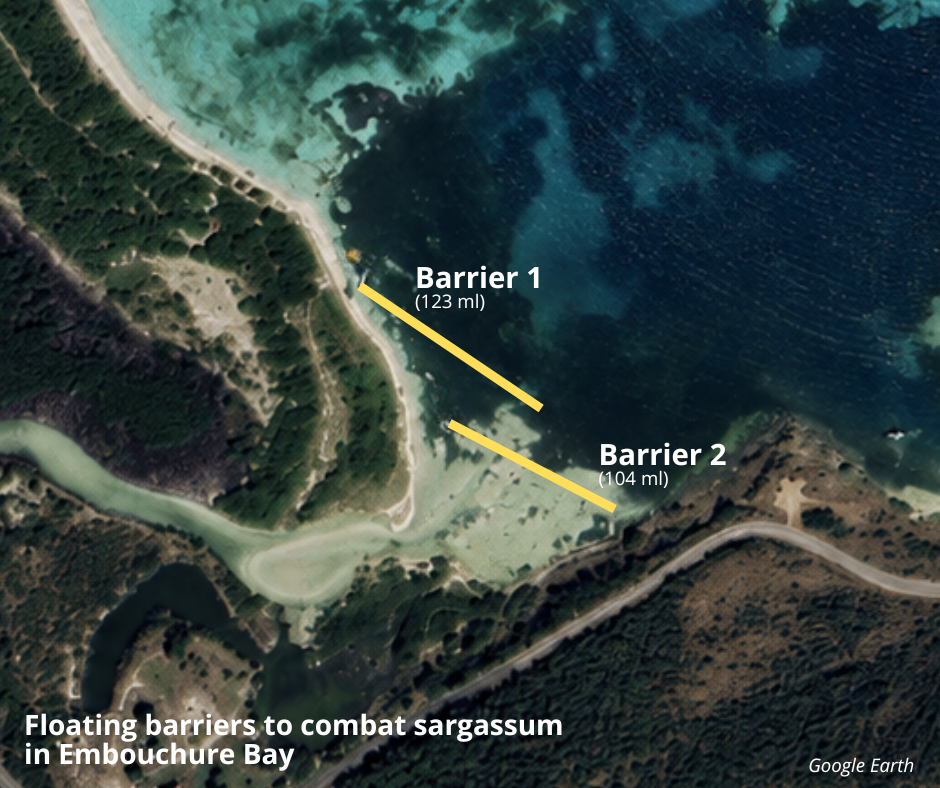
To limit the accumulation of Sargassum on its coastline, the Collectivité de Saint-Martin has decided to install barriers in the sea. Two locations have been selected: Cul de Sac Bay and Embouchure Bay. A Guadeloupe-based company, Antilles Travaux Sous-Marins, was selected by the COM following a call for bids to install the barriers. At the same time, the COM commissioned a consultant to conduct a feasibility study for the installation of the barriers and to define methods for collecting the sargassum.
Plans call for the installation of four floating barriers—two per site—covering a total length of 700 meters at Cul de Sac and 227 meters at the mouth of the Etang aux Poissons. The installation work (anchoring and deploying the nets) is estimated to take between four and six weeks at Cul de Sac and between two and three weeks at the Etang aux Poissons. The start date for the project has not yet been announced.
Once operational, the barriers will be inspected by Antilles Travaux Sous-Marins three times during the first year of operation and maintained by another company under delegation from the COM. In the event of severe weather (winds exceeding 30 knots and waves exceeding 2 meters), the barriers must be dismantled. The Sargassum retained by the barriers must be removed by the Collectivité’s services.

Given the environmental implications, the construction of such dams requires compliance with a strict administrative procedure. The dams will be built within 3 km of four natural areas of ecological, faunistic, and floristic interest (Red Rock, Tintamare, etc.). Some of them will be located at the edge of the biotope protection order’s perimeter or within the lake and marine areas of the Marine Reserve and the RAMSAR wetland and marine site.
Furthermore, since the project is likely to have impacts on natural and marine environments, disrupt the movement of sea turtles, and affect their habitats, the company has taken measures to limit these negative environmental effects (conducting work outside the boundaries of the Cul de Sac Reserve, avoiding ecologically sensitive areas as much as possible when installing anchors, using swing anchors whenever possible, cleaning construction equipment off-site, etc.).
The application has been submitted for review to the regional health agency and the prefecture; however, it will not be subject to an environmental assessment. Nevertheless, certain aspects may be subject to specific environmental requirements (Water Act). It will also need to obtain a temporary occupation permit (AOT) for the State’s public maritime domain.
The cost of installing the system and inspecting it for one year is estimated at 896,550 euros.