Pinel: Operating agreements for two testaurants under judicial review
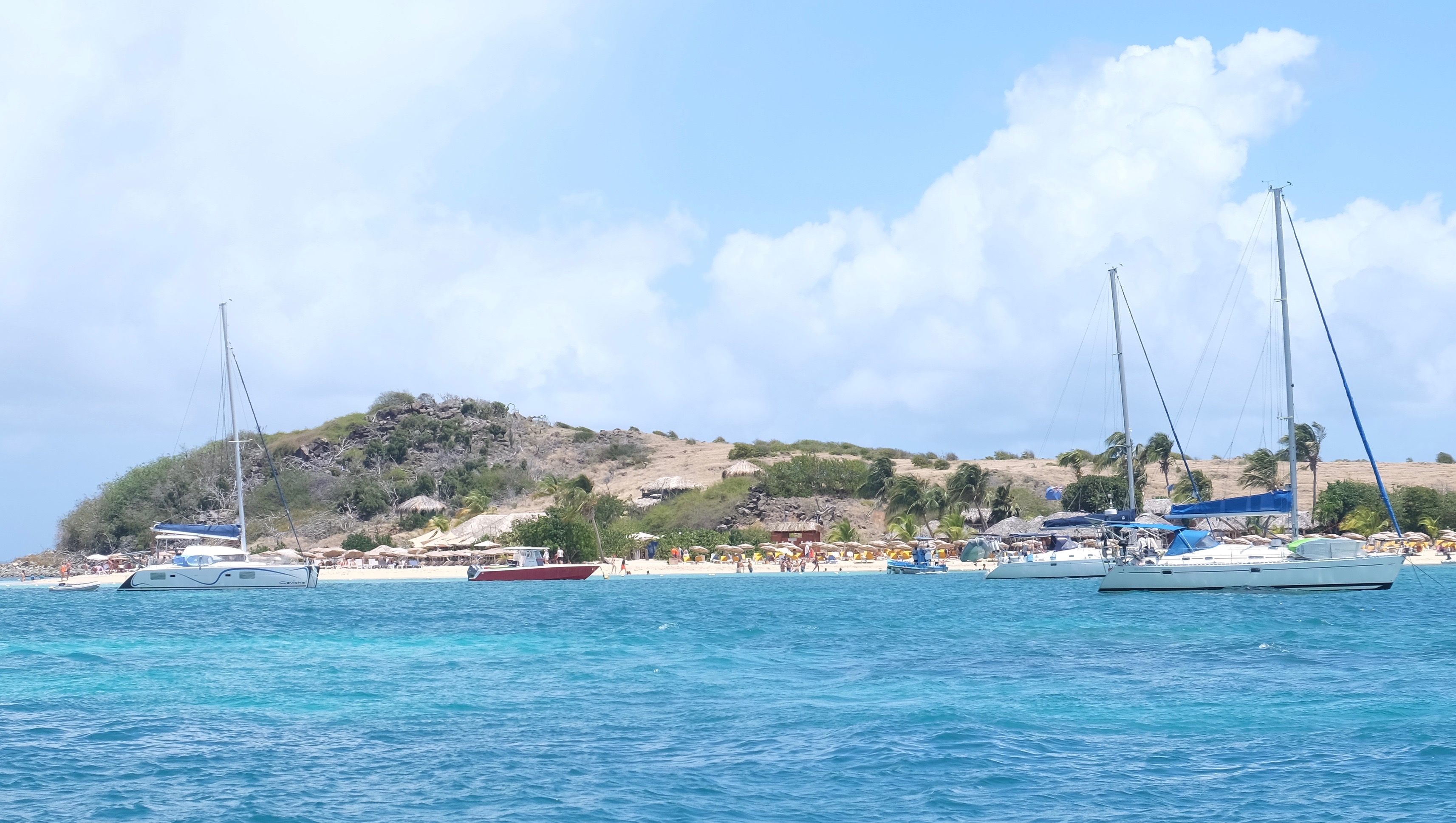
In April 2019, the Conservatoire du Littoral selected the companies Karibuni and P2D2 to operate two restaurants on Pinel Islet following a call for proposals. These two agreements were challenged by SNC Pinel, an unsuccessful bidder.
The case was first brought before the Administrative Court of Saint Martin, which, in 2022, annulled the agreement. Karibuni appealed this ruling. In 2024, the case was reviewed by the Bordeaux Administrative Court of Appeals, which overturned the Saint-Martin court’s decision. SNC Pinel then appealed to the Council of State, which has just issued its ruling.
The outbid company continues to argue, in particular, that the bid selected by the conservatory is “irregular in that it proposes the use of equipment and facilities that cannot be dismantled” and that the agreement “does not leave at least 80% of the shoreline length and 80% of the beach area unobstructed,” as required by law. According to SNC Pinel, the agreement must take the form of a beach concession and comply with the specific associated procedure.

The Council of State thus considers that SNC Pinel’s petition to overturn the most recent court decision is well-founded. On October 9, it overturned the ruling of the Bordeaux Administrative Court of Appeal, which must now reexamine the case.
Contents of the Karibuni Company Agreement
The agreement entered into with the Conservatoire du Littoral “covers the use, for a period of nine years, of a parcel of land that includes a significant portion of a natural beach, providing for the operation of a food service area, the installation and rental of beach equipment, and imposing obligations on the beneficiary regarding site cleanliness and beach maintenance, in particular the plantings intended to provide visual screening, shade, and protection against beach erosion, as well as obligations to maintain the restrooms installed on the site for public use—without exclusivity for restaurant patrons—and an educational role in informing and raising public awareness about the site’s fragility.”
The legal provisions on which the Council of State relied
- General Code of Public Property
“No one may, without a title authorizing such action, occupy a structure belonging to the public domain of a public entity or use it in a manner that exceeds the right of use to which everyone is entitled.”
“Decisions regarding the use of the public maritime domain shall take into account the intended purpose of the areas concerned and that of the adjacent land areas, as well as the requirements for the preservation of coastal sites and landscapes and biological resources; as such, they shall be coordinated, in particular, with decisions concerning adjacent lands designated for public use. (…)”
“Pedestrian access to beaches and their free and unrestricted use by the public are governed [by the Environmental Code]. Beach concessions are granted or renewed following a public hearing conducted in accordance with [the Environmental Code].”
“The State may grant concessions in the public maritime domain for the purpose of developing, operating, and maintaining beaches. / The concessionaire is authorized to occupy a portion of the concession area to establish and operate activities intended to meet the needs of public beach services. These activities must be directly related to the operation of the beach and must be compatible with maintaining free and unrestricted access to the beaches, the requirements for preserving coastal sites and landscapes and biological resources, as well as with the intended use of the surrounding land areas. / The term of the concession may not exceed twelve years.”
- Environmental Code
“Pedestrian access to beaches is unrestricted unless justified grounds related to safety, national defense, or environmental protection require special provisions. Free and unrestricted public use constitutes the fundamental purpose of beaches, on the same footing as their use for fishing and marine aquaculture. (…) Beach concessions are granted under the conditions set forth [in the General Code of Public Property]. They preserve free movement on the beach and the public’s free use of a strip of land of significant width along the entire coastline. (…)”.